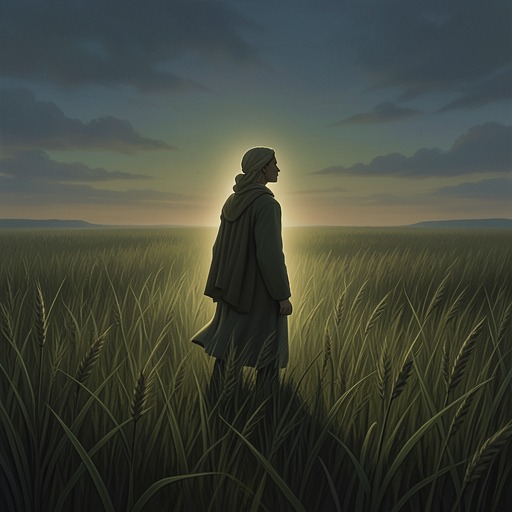
Schuhart Sr. as a moulage
Roadside PicnicSchuhart Senior as a moulage is the uncanny condition in which Redrick’s dead father persists as a motionless, human-shaped presence in the family home. The scene makes an abstract account of the Zone’s dead materially intimate: the old man is seated at a table, recognized as Redrick’s father, and included in a celebration, yet he neither moves nor responds. His presence unsettles the boundary between a body reconstructed after death and a family member who can still be addressed.
The Moulage and Its Unnatural Life
Valentine Pilman rejects Richard Noonan’s description of the figures as zombies. He insists they are not corpses, but moulages: reconstructions made on skeletons, or dummies. The correction does not make them ordinary objects. Valentine explains that they possess a curious property he calls autonomic life capability: if a part is cut from one, that part continues living separately, without physiological solutions to nourish it. The explanation grants the moulages a kind of activity while withholding the signs by which people ordinarily recognize a living person.
That gap is the force of the term. Valentine’s technical account seeks to distinguish the moulages from corpses, but the distinction cannot make their appearance or presence comfortable. Their life is not described as recovery, consciousness, or return to an ordinary human existence. Instead, the account offers a peculiar persistence of bodily function, something that can survive even separation from the body that once gave it a recognizable human form.
Recognition in the Schuhart Home
The condition becomes personal when Richard Noonan enters the living room and sees an old man sitting at the table. The figure is motionless and leans slightly. Pink light from a lampshade falls across his broad, dark face, sunken toothless mouth, and dull, lifeless eyes. The stillness is not an abstract property of moulages here: it occupies the familiar room where Redrick’s family receives a visitor.
Noonan recognizes the figure as a moulage and recalls the odor associated with it. He knows that the smell should have lasted only for the first few days and then disappeared, yet memory makes him smell it again. This return is explicitly framed as recollection rather than a new physical change in the room. The remembered odor links the old man’s present, motionless appearance to the sensory experience that first made the condition repellent and difficult to forget.
Guta tells Noonan that Redrick is with someone and that they should leave soon because the conversation has gone on for a long time. The brief exchange places the visitor at the threshold of a household scene already shaped by the old man’s presence. When Redrick comes in, he does not introduce his father as an object of study or a medical puzzle. He introduces the old man to Noonan as his pop.
The Toast and the Limits of Response
Redrick announces a celebration and slams a bottle onto the table. He tells the motionless old man that they are going to celebrate, then presents Noonan as their friend and identifies the seated figure as his father, Schuhart Senior. The gesture draws the moulage into the grammar of family life: Redrick speaks to him as a father and treats the gathering as something they share.
Redrick sets out glasses, opens the bottle, and asks Noonan to pour a little for his father, just enough to cover the bottom of the glass. Noonan takes his time. The old man remains in the same position, staring at the wall, and does not react when Noonan moves the glass closer to him. The careful pour and the unresponsive figure occupy the same small action, making the distance between inclusion and participation impossible to overlook.
The scene does not establish that Schuhart Senior can understand Redrick, hear him, or accept the drink. It shows Redrick addressing him and arranging the toast, while the old man gives no visible response. That restraint matters: the family ritual is real as an action undertaken by Redrick and Noonan, but it cannot restore the reciprocal gestures that would ordinarily make a toast a shared exchange.
Family Presence and the Zone’s Aftermath
Schuhart Senior’s moulage condition brings the Zone’s strange bodily persistence into domestic space. Valentine’s explanation describes separated parts that live on without nourishment; Noonan’s encounter supplies a familiar face, an old man at a table, and the involuntary return of a remembered smell. The two accounts do not resolve the mystery. One names an anomalous capability, while the other registers what that capability feels like to someone confronting its human appearance.
Redrick’s conduct holds open a different kind of relation to the figure. He does not deny the old man’s immobility or elicit a response from him. Instead, he speaks to him as his father, includes him when welcoming Noonan, and reserves a little of the drink for him. The scene therefore places family recognition alongside the bodily evidence that ordinary life has not returned. Schuhart Senior remains present in Redrick’s home, but the narrative offers no assurance that he remains present to himself or to anyone else.
The episode’s force lies in this unresolved coexistence. The moulage is described as more than a corpse, yet at the table he cannot answer, move, or take the glass. Redrick’s toast neither explains nor reverses that condition; it exposes what it means for a family to address someone whose body persists without the familiar signs of participation. The old man’s stillness turns the Zone’s biological anomaly into an intimate and lasting disturbance of home, memory, and mourning.